
In today’s fast-changing world, creativity and adaptability are just as vital as reading or math. Design thinking—a problem-solving process rooted in empathy and innovation—is transforming classrooms into laboratories of ideas. By guiding students to define challenges, brainstorm solutions, and test their ideas, educators are building not just knowledge, but confidence and creativity.
Design thinking empowers learners to take ownership of their education. It encourages curiosity and resilience—skills every student needs to thrive in the 21st century. And just like mastering touch typing helps students communicate with clarity and precision, design thinking builds the mental agility to turn abstract ideas into tangible results.
The Core of Design Thinking in Education
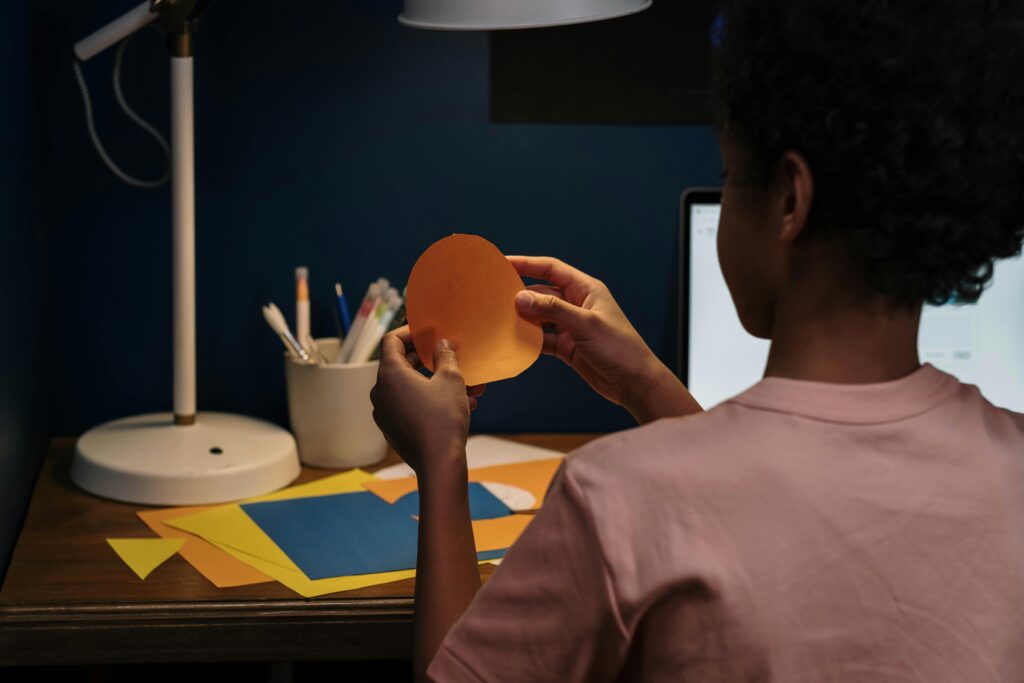
At its heart, design thinking is about solving problems by understanding people first. The process typically includes five stages: empathize, define, ideate, prototype, and test. But in a classroom setting, it’s less about rigid steps and more about cultivating a mindset.
When students are asked to empathize, they consider others’ perspectives—whether designing a community project, improving a classroom tool, or finding a better way to study. This builds emotional intelligence and teamwork. During ideation, creativity takes center stage: students brainstorm freely, exploring solutions without fear of failure.
Then, through prototyping and testing, students bring those ideas to life. They learn that not every idea works the first time—and that’s okay. The process normalizes trial and error, teaching persistence and adaptability.
Master Typing & Digital Skills with Typesy!
Go beyond keyboarding—Typesy helps you boost digital literacy, productivity, and efficiency in today’s tech-driven world.



Applying Design Thinking to Everyday Learning

Educators are using design thinking to make subjects more engaging and relevant. For instance, a science teacher might challenge students to design a water filtration system for a local area, while a language arts class might use the process to improve how stories are shared digitally.
Technology plays a key role here. Students might document their design process through digital project portfolios, collaborate using online tools, or present findings in interactive formats. These experiences not only deepen understanding but also improve digital literacy and communication skills, both essential for future success.
Typing fluency is another unsung hero in this process. Whether students are typing research notes, creating prototypes with digital tools, or drafting proposals, being able to type efficiently allows them to focus on ideas rather than mechanics. When technology becomes seamless, creativity can flourish.
Teachers can introduce design thinking at any grade level or subject. Younger learners can brainstorm ways to organize classroom materials, while older students might tackle real-world challenges, like reducing waste or improving accessibility in public spaces.
Building Innovation and Confidence
Design thinking gives students the freedom to explore, make mistakes, and learn from them—a cornerstone of a growth mindset. When learners see their ideas evolve from sketches to functioning models, they experience the satisfaction of creation. This process encourages collaboration and communication—two critical 21st-century skills.
Moreover, the framework aligns perfectly with digital learning tools. Students can use typing-based platforms to document their process, build presentations, and share reflections. Tools like these help bridge creativity and productivity, allowing ideas to move from imagination to execution with ease.
Teachers who integrate design thinking also benefit. Classrooms become more dynamic, discussions more meaningful, and students more self-directed. Educators shift from information providers to facilitators of exploration, guiding learners through questioning and iteration.
By combining digital creativity and critical thinking, schools can prepare students not only to solve today’s problems but to imagine solutions for tomorrow’s. The classroom becomes a place where design, technology, and human-centered thinking meet—empowering learners to innovate with purpose.
Not on Typesy Yet? You're Missing Out!
Master typing, boost productivity, and enhance digital literacy with Typesy—the leading platform for adaptive and engaging typing education. Whether you're an individual learner, a homeschool educator, or managing a classroom, Typesy has the perfect solution for you!
Choose Your Ideal Experience:
 Get Started with Typesy Today! – Transform the way you learn and teach typing!