
Typing has come a long way from mechanical typewriters and early desktop keyboards. Today, predictive text, artificial intelligence, and emerging input technologies are reshaping how we interact with digital devices. Yet even as tools become smarter and more automated, typing remains a foundational skill—one that empowers users to communicate clearly, efficiently, and confidently.
Understanding where typing is headed helps learners, educators, and professionals prepare for a future that blends human skill with intelligent technology. The goal isn’t replacing typing, but enhancing it.
Predictive Text and AI: Helpful Partners, Not Replacements

Predictive text is now embedded in smartphones, tablets, and word processors. These systems analyze patterns, context, and past behavior to suggest words or phrases in real time. AI-powered tools go even further, offering sentence completions, grammar corrections, and tone suggestions.
Used thoughtfully, these features can boost productivity and reduce repetitive strain. They’re especially helpful for drafting emails, taking notes, or capturing ideas quickly. However, they work best when paired with strong touch typing fundamentals. Without the ability to type fluently, users may rely too heavily on suggestions, slowing down rather than speeding up their workflow.
AI tools are also only as good as the input they receive. Clear, accurate typing helps predictive systems learn user intent more effectively. In educational settings, this balance is critical. Students who develop solid typing skills first are better equipped to use AI as a support tool—not a crutch.
There’s also a cognitive benefit to manual typing. Research continues to show that typing (and even handwriting) reinforces learning by engaging memory and comprehension. When learners type summaries, reflections, or original content, they process information more deeply than when passively selecting suggested text.
This is why digital education increasingly emphasizes digital literacy and intentional technology use. Knowing when to accept a suggestion—and when to think independently—is a skill that grows with practice.
Master Typing & Digital Skills with Typesy!
Go beyond keyboarding—Typesy helps you boost digital literacy, productivity, and efficiency in today’s tech-driven world.



Emerging Input Technologies and What They Mean for Learners
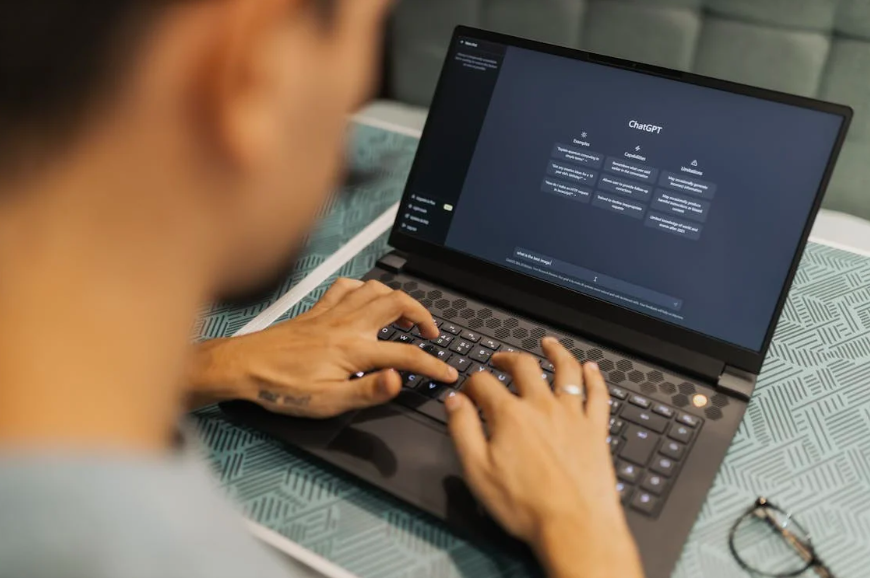
Beyond predictive text, new input methods are expanding how we interact with devices. Voice-to-text has improved dramatically, gesture-based typing is more accurate, and experimental tools like eye tracking and brain-computer interfaces are gaining attention.
These innovations are exciting, particularly for accessibility. Voice input can support users with physical limitations, while adaptive keyboards help meet diverse learning needs. Still, typing remains the most precise and universally accepted input method across platforms.
In professional and academic environments, typing offers unmatched control. Editing, formatting, coding, and structured writing all rely on keyboard proficiency. Even when voice tools are used for drafting, typing is often required for refinement and final output.
For young learners, this means preparing for a hybrid future. Typing instruction should evolve alongside technology, teaching students how to move seamlessly between input methods. A strong typing foundation allows them to adapt quickly as tools change.
There’s also a growing need for safe and responsible AI use online. Predictive systems collect data to function effectively, raising questions about privacy and accuracy. Users who understand how these tools work are better equipped to make informed choices about what they share and when to rely on automation.
The future of typing isn’t about choosing between human skill and machine assistance—it’s about combining them thoughtfully. Touch typing provides the control, speed, and confidence that make advanced tools truly useful.
As technology continues to evolve, one thing remains clear: the ability to type efficiently is still a core digital skill. Whether interacting with AI, navigating new input devices, or communicating ideas, typing is the bridge between thought and action.
By investing in typing skills today, learners prepare themselves not just for current tools—but for whatever comes next.
Not on Typesy Yet? You're Missing Out!
Master typing, boost productivity, and enhance digital literacy with Typesy—the leading platform for adaptive and engaging typing education. Whether you're an individual learner, a homeschool educator, or managing a classroom, Typesy has the perfect solution for you!
Choose Your Ideal Experience:
 Get Started with Typesy Today! – Transform the way you learn and teach typing!