
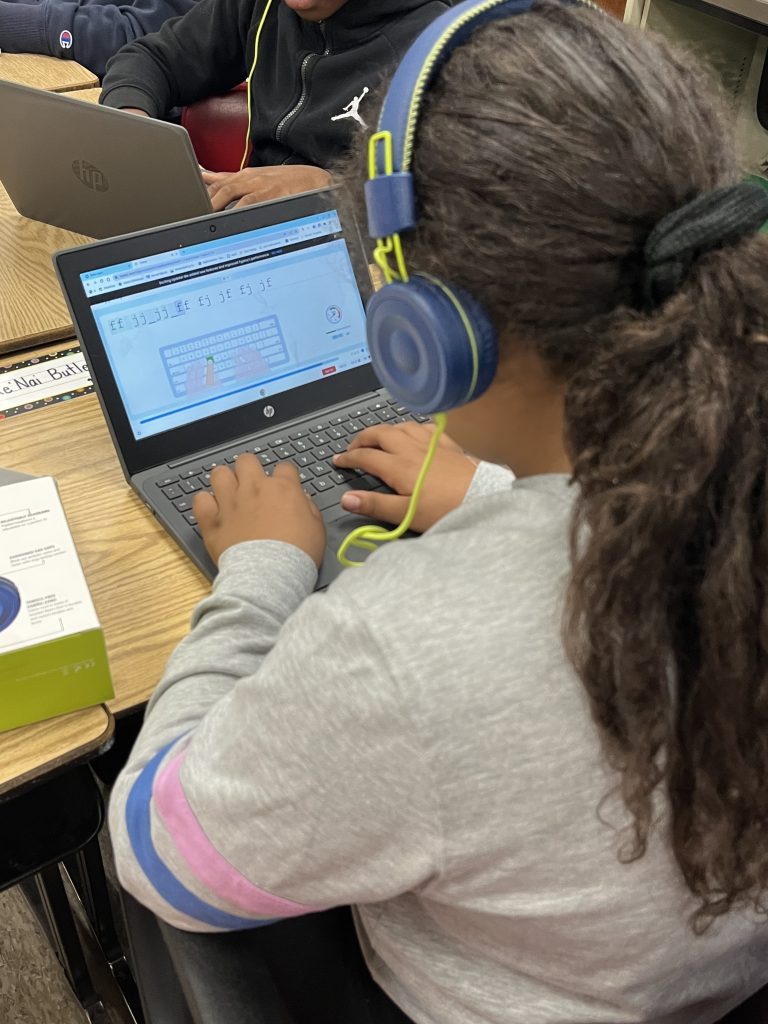
Across multiple district guidelines and instructional programs, two dominant benchmark models appear:
- “~5 WPM per grade level” rule used by several districts preparing students for digital testing.
- Skill-development bands (elementary → middle → high school) with increasing expectations.
Using these sources and typical district expectations, the following grade-by-grade targets are considered reasonable and widely defensible in K-12 technology curricula.
Reasonable Typing Speed Benchmarks (K–12)
| Grade | Reasonable Target WPM | Instructional Focus |
| Kindergarten | 2–3 WPM | Keyboard awareness, letter location |
| 1st | 4–5 WPM | Basic key familiarity |
| 2nd | 8–10 WPM | Begin structured keyboarding |
| 3rd | 12–15 WPM | Introduction to touch typing |
| 4th | 18–20 WPM | Developing consistency |
| 5th | 22–25 WPM | Functional typing for writing tasks |
| 6th | 28–30 WPM | Academic typing fluency |
| 7th | 32–35 WPM | Faster composition for assignments |
| 8th | 38–40 WPM | Digital assessment readiness |
| 9th | 42–45 WPM | High school productivity baseline |
| 10th | 45–50 WPM | Efficient essay writing |
| 11th | 50–55 WPM | College readiness |
| 12th | 55–60 WPM | Workforce-level functional typing |
Why These Benchmarks Are Considered Reasonable
1. Alignment with common district recommendations
Some districts explicitly recommend about 5 WPM per grade level, leading to 60 WPM by grade 12.
2. Functional productivity targets
Educational typing programs often group targets as:
- Elementary: 8–20 WPM
- Middle school: 20–30 WPM
- High school: 30–40+ WPM
More rigorous curricula push high school students to 50–60 WPM, which aligns with entry-level office productivity expectations.
3. Alignment with writing demands
Upper elementary handwriting averages about 10–15 WPM, so keyboarding should eventually exceed that to improve writing efficiency.
Accuracy Targets (Equally Important)
Speed without accuracy is usually discouraged in keyboarding standards.
Typical expectations:
| Grade Band | Accuracy Target |
| K–2 | 80–85% |
| 3–5 | 85–90% |
| 6–12 | 90–95% |
These ranges appear across multiple instructional frameworks and typing curricula.
Key Implementation Insight for Schools
Most technology curriculum frameworks recommend starting formal touch-typing instruction around Grade 3, when motor skills and spelling development are strong enough to support technique.